

Product Overview
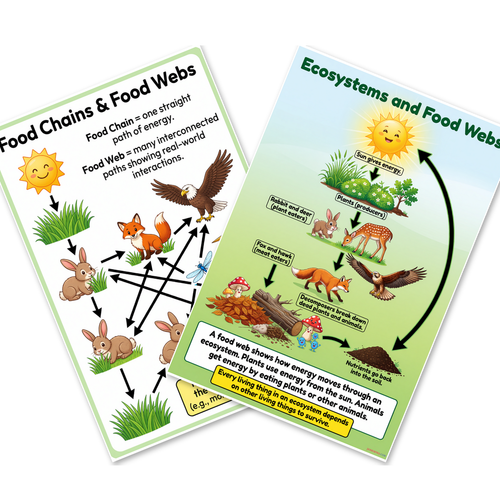
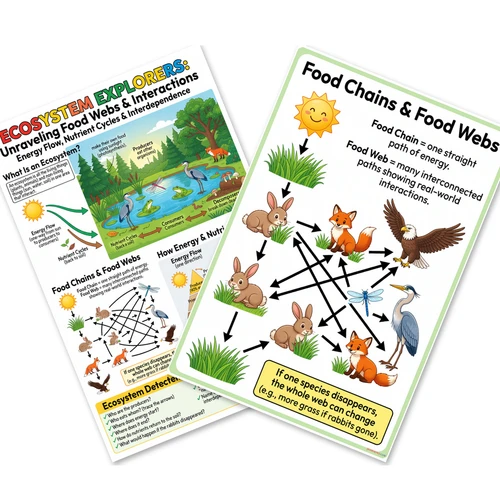
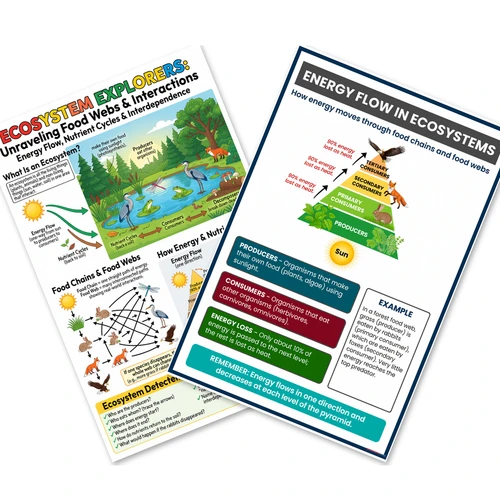
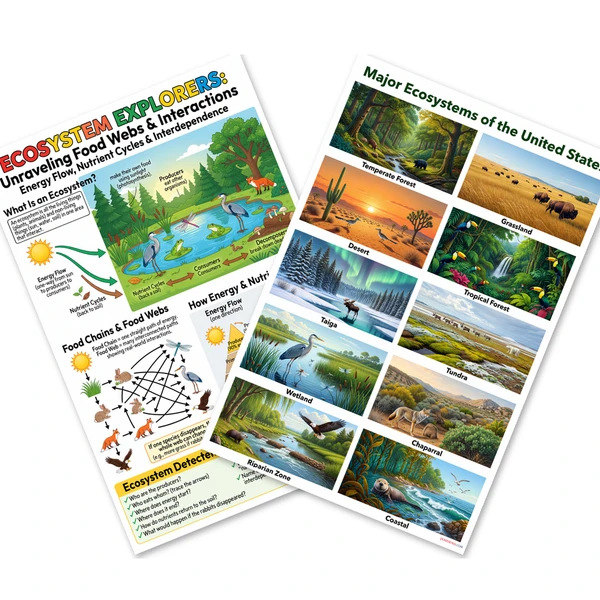
Bring the living world into clear focus with this coordinated pair of 12x18 inch educational posters. One side delivers a complete ecosystem diagram showing how energy flows from the sun through producers, consumers, and decomposers while nutrients cycle back to the soil. The companion print maps eight major U.S. ecosystems—Temperate Forest, Grassland, Desert, Tropical Forest, Taiga, Tundra, Wetland, Riparian Zone, and Coastal—each rendered with signature plants and animals. Together they form an engaging visual reference that helps middle-school and early high-school learners connect food chains, energy pyramids, and real-world habitats. PosterEnvy prints both posters on durable paper in a solar-powered, family-owned shop in the USA so the bright illustrations stay sharp through years of classroom or home use. Hang them side-by-side in a study corner, science nook, or family learning space to turn any wall into an inviting exploration station. Ideal for a classroom, home, or office backdrop.
- Pair the Ecosystem Explorers food-web diagram with the eight-biome U.S. ecosystems map to give students one clear, coordinated reference for energy flow, nutrient cycles, and habitat diversity in two 12x18 inch posters.
- Colorful pond and forest scenes on the first poster label producers, consumers, and decomposers, while the second poster showcases bison on the plains, moose under the northern lights, toucans in the rainforest, and more across eight iconic American landscapes.
- Printed on heavy-duty paper with vibrant, fade-resistant inks, these 12x18 inch posters are built to survive daily classroom traffic, homeschool setups, or a busy study wall for many school years.
- Designed and printed in PosterEnvy’s solar-powered, family-owned U.S. facility, each sheet meets high standards for color accuracy and long-term durability without any imported shortcuts.
- Create an inviting science corner in a home study, classroom reading nook, or library display where young explorers can trace energy arrows and compare habitats at a glance.